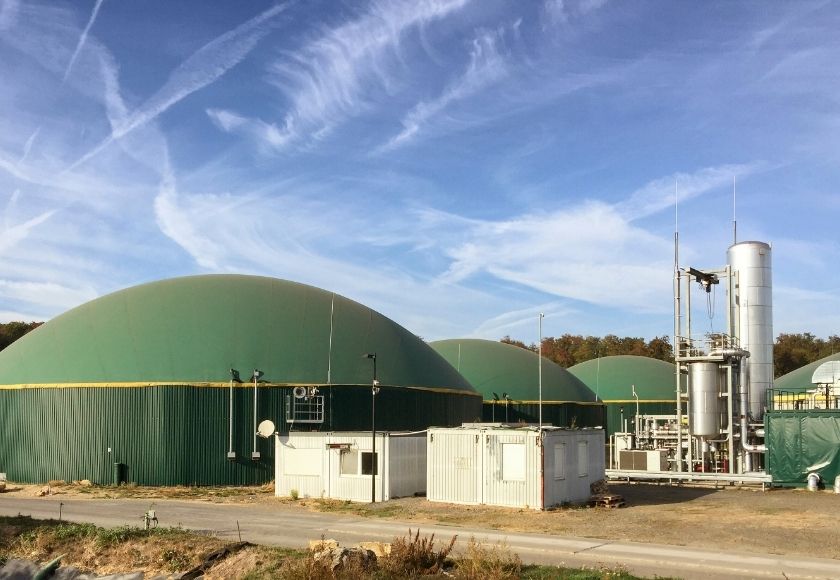

Are you ready to transform organic waste into genuinely high-quality fertilizers and multiply the amount of electrical energy generated from waste?
CONVENTIONAL BIOGAS PRODUCTION (Methane CH₄);
The term biogas essentially refers to the production of usable gas from organic waste. In other words, it is the conversion of organic matter into carbon dioxide and methane gas under the influence of microbiological flora in an oxygen-free environment.
Since biogas production is fundamentally based on the decomposition of organic matter, plant waste or animal manure can be used as the primary material. Animal manure is used worldwide as a primary material because it becomes more useful through fermentation during its conversion into biogas. Highly efficient biogas production can also be achieved using poultry manure. The use of poultry manure is important for agriculture. However, due to its highly acidic content, this manure cannot be applied directly to soil. When this otherwise unusable manure is converted into biogas, it becomes useful. Today, biogas is produced on many different scales, ranging from meeting the heating and cooking needs of a single household to generating electricity with generators and operating large-scale power plants.
Biogas is formed in three stages:
Hydrolysis
Acid formation
Methane formation
The first stage involves converting waste into a soluble form through enzymes secreted by microorganisms. At this stage, polysaccharides are converted into monosaccharides, while proteins are converted into peptides and amino acids. In the following stage, acid-forming bacteria become active and convert these substances into smaller molecules such as acetic acid. Acid formation may cause the pH to decrease during production, which may negatively affect the bacteria responsible for methane formation. In the final stage, methane-forming bacteria convert these substances into biogas. As can be seen, biogas formation occurs through microbiological factors; therefore, any conditions affecting these microbiological organisms naturally also affect biogas production.
Hydrolysis stage: In the first stage, substances that are not soluble are dissolved within the sludge through cellular enzymes secreted by microorganisms. They convert long-chain, complex carbohydrates, proteins, fats, and lipids into short-chain structures. The first stage, hydrolysis, is completed when these substances are converted into simple organic compounds.
Acid formation stage: Organic substances that have become soluble are converted into smaller molecules such as acetic acid, volatile fatty acids, hydrogen, and carbon dioxide. This stage is carried out by anaerobic bacteria. These bacteria create a suitable environment for methane-forming bacteria.
Methane formation: This is the process in which bacteria convert acetic acid into biogas by breaking it down or through the synthesis of hydrogen and carbon dioxide. Methane production is a slower process compared with the other stages. The bacteria involved in methane formation are highly affected by environmental conditions.
Materials used for biogas production can be examined under three categories: animal manure, organic waste, and industrial waste. The materials used in this context include:
Animal waste
Waste generated through livestock farming
Animal manure
Plant waste
Garden waste
Food waste
Industrial waste
Agricultural waste
Waste generated by the forestry industry
Waste generated by the leather and textile industries
Waste generated by the paper industry
Food industry waste
Waste generated by the vegetable, grain, fruit, and oil industries
Sugar industry waste
Municipal solid waste
Wastewater treatment plant waste
Biogas can be produced using agricultural waste as well as industrial waste. The separate collection of municipal waste and the collection of sewage waste at treatment plants offer significant biogas production potential. In this context, certain studies have been carried out in Türkiye by the İzmir Metropolitan Municipality as part of the Grand Canal Project.
Bioreactors;
This is the general term for structures designed for biogas production. They can be divided into small-volume and large-volume bioreactors. Small-volume reactors can have capacities of up to 3 tonnes. However, studies have shown that the desired efficiency cannot be achieved below 10 tonnes. Whether production will be batch-based or continuous is also a determining factor in bioreactor design. China is the country that uses bioreactors and biogas most extensively in the world. The country also has its own distinctive small-capacity reactors. In recent years, bag-type or balloon-type reactor models have also become widespread due to their low cost. However, the efficient service life of these reactor models is approximately 2–3 years. The three most commonly used reactors in biogas production are as follows:
Fixed-dome reactors (Chinese type)
Floating-dome reactors (Indian type)
Bag-type reactors (Taiwanese type)
Environmental Dimension
When animal manure is released into the environment without undergoing any treatment, it causes extremely high levels of pollution. The annual CH₄ emissions generated by manure from a farm with 80 cows are equivalent to 110 tonnes of CO₂—the carbon emissions generated by 110 vehicles continuously on the road. By installing a biogas plant on such a farm, this environmental harm can be converted into green energy that can be used on the farm.
When untreated animal manure is applied to soil, the soil’s salinity level increases, harmful organisms contained in the manure are introduced into the cultivated soil, and groundwater contamination occurs.
Economic Dimension
A 1 MW wind turbine can generate an average of 3,066 MWh of electricity annually. A 1 MW solar power plant can operate only during sunlight hours—an average of 2,300 hours per year—and generate 2,300 MWh of electricity. A 1 MW biogas plant can generate electricity for 8,200 hours per year.
In addition to electricity generation, the thermal energy produced during the operation of a cogeneration plant can be used in many areas.
The waste obtained after fermentation is a good soil conditioner and can be enriched and made available for use as biofertilizer.
SO WHY HYDROMETHAN BIOGAS?
Operating biogas processes efficiently involves numerous challenges and parameters. Many factors—such as variations in the organic waste used as the primary raw material, changes in seasonal conditions and air temperature, the organic matter loading rate, pH value, toxicity, the C/N (Carbon/Nitrogen) ratio, and ammonia formation—may affect or even completely stop the production of Biogas from waste.
Furthermore, extremely long fermentation periods reduce the capacity of waste that can be processed and decrease the proportion of METHANE CH₄ gas obtained, consequently reducing Electricity Generation.
The organic outputs obtained through fermentation often remain far from being efficient, high-quality fertilizers and cannot be used on agricultural land. Consequently, this results in the loss of an additional source of economic income and prevents productive results from being achieved on agricultural land.
Subjecting organic waste to Hydrogenation through BAUER processes:
Shortens the fermentation process of waste while increasing the capacity of Organic Matter that can be processed severalfold.
Releases significantly less odor into the environment per kWh produced and per Tonne/Day of Organic Fertilizer.
Can increase the amount of electricity generated from waste per tonne by 2–3 times.
Since the quality of METHANE used in electricity generation is improved, emissions of environmentally harmful gases and minerals remain far below acceptable levels.
The organic waste obtained as a result of the process can be treated to produce high-quality Liquid and Solid fertilizers.
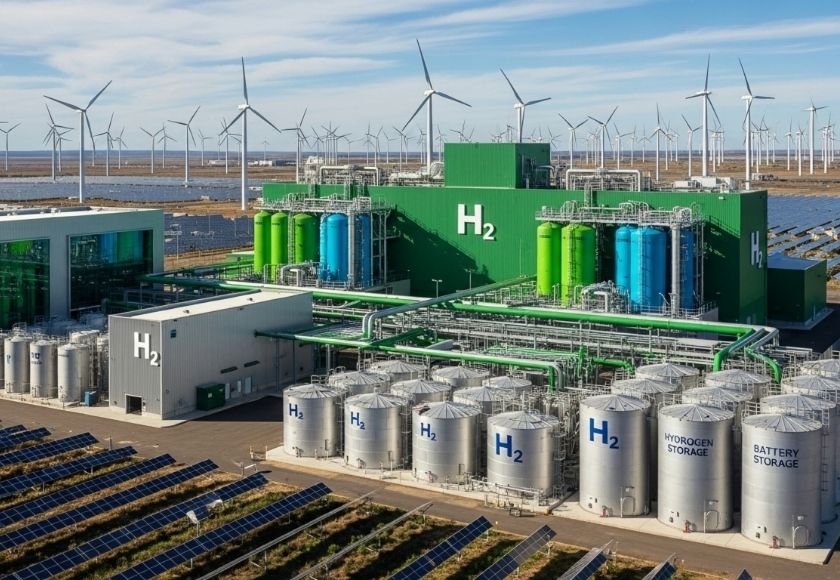
With next-generation HYDROMETHAN technology, the objective is to produce Electrical and Thermal energy more rapidly, sustainably, and economically while obtaining high-quality fertilizers and organic materials.